Monday, 3 September 2012
Extraction of aluminum from bauxite
EXTRACTION OF ALUMINIUM FROM BAUXITE
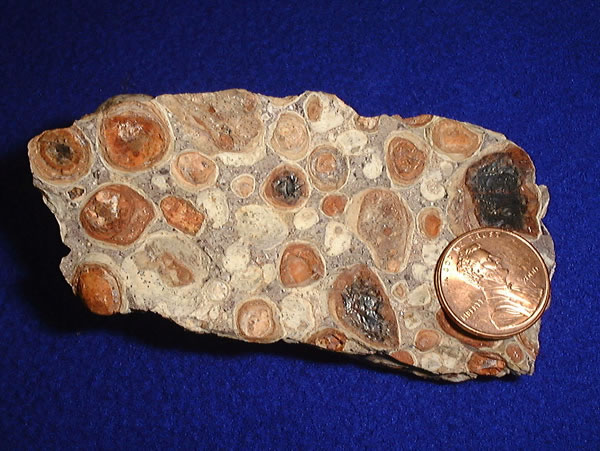 |
| Picture of Bauxite |
The first step to obtain aluminium from bauxite is
obviously, mining for the ore (bauxite). This is relatively simple as it is
found in abundance in the Earth. However, aluminium is never found isolated as
it is relatively high up in the reactivity series thus would have already
reacted with other compounds/elements such as Fe(III) oxide [which gives it the
brown colour].
The second step is known as the 'Bayer process' The process occurs in two main steps. Firstly the aluminum ore is mixed with NaOH in which the oxides of aluminum and silicon will dissolve, but other impurities will not. These impurities can then be removed by filtration. Carbon dioxide gas is then bubbled through the remaining solution, which forms weak carbonic acid which neutralises the solution and cause the aluminum oxide to precipitate, leaving the silicon impurities behind. After filtration, water is removed by heating to dryness. Purified aluminium oxide is thus obtained. (also known as alumina).
The third step is known as the Hall-Heroult method.
(electrolysis)
Once purified aluminum oxide has been manufactured aluminum can be removed from it by the Hall-Heroult Method. In this the aluminum oxide is mixed with cryolite (made of sodium fluoride and aluminum fluoride). This is used to lower down the melting point of the electrolyte. Originally, temperature of 2000°C is needed to melt alumina. By adding cryolite, the melting point is well decreased below 1000°C. This is much lower than the temperature required to melt pure aluminum oxide so much energy is saved.
Once purified aluminum oxide has been manufactured aluminum can be removed from it by the Hall-Heroult Method. In this the aluminum oxide is mixed with cryolite (made of sodium fluoride and aluminum fluoride). This is used to lower down the melting point of the electrolyte. Originally, temperature of 2000°C is needed to melt alumina. By adding cryolite, the melting point is well decreased below 1000°C. This is much lower than the temperature required to melt pure aluminum oxide so much energy is saved.
During the electrolysis, the graphite lining on the inner side of the steel
tank acts as a cathode and attracts aluminium ions. (Al3+ ions) The
aluminium ions then gain electrons and become reduced to Al. this is then
collected at the bottom of the electrolysis set up and can be retrieved.
O2- ions are attracted to the anodes. They gain electrons ( become
reduced ) and become oxides. The oxygen react with the carbon anodes, making
oxides of carbon such as Carbon Monoxide (CO) and Carbon Dioxide (CO2).
This is a continuous process as the cell is kept going and the alumina is added at the top and aluminium extracted from the bottom. On the contrary, batch processes are less efficient as they stop -- and start again, wasting time and energy.
This is a continuous process as the cell is kept going and the alumina is added at the top and aluminium extracted from the bottom. On the contrary, batch processes are less efficient as they stop -- and start again, wasting time and energy.
Electrolysis: Extraction of aluminium from alumina in the Hall-Heroult Cell.
IMPACT ON THE ENVIRONMENT AND SOLUTIONS

Problem :
Air pollution:
Dust caused by digging, earth and ores manipulations is an important cause of air pollution.
Smelting (heating up ore to separate it from the gangue) produces very large amounts of air pollutants, notably as SO2 (sulphuric oxide, responsible for acid rain).
Consequently, mines are also a source of greenhouse gas emissions.
Dust collectors can be placed near the sites, this system is used to improve the quality of air released from the site by collecting dust and other impurities from air or gas
Problem:
 Energy wastage and pollution:
 Explosive is used to open cast mining so as to remove ores. This wastes a lot of electricity and also produces dusts and scars the surrounding, harming the environment.
Solution :
In-situ leaching can be carried out instead. Leeching uses lesser electricity than original way of mining and does not produce waste gas as well.
Problem:
Land Problems:
Land Problems:
Extraction
of metals from the ground damages the ground, and makes it hard for things to
be grown on the ground as it has been disturbed and contaminated by acid, as
well as the soil being removed. Also it could lead to land collapses and means
that the land could collapse on villages, leaving behind disrupted communities
and damaged landscapes.
Solution:
Phyto-mining uses plants to absorb metals from the ground and thus can be used to clean contaminated land as it. Treating the plants with certain chemicals increases their ability to accumulate minerals in their cells.
Phyto-mining uses plants to absorb metals from the ground and thus can be used to clean contaminated land as it. Treating the plants with certain chemicals increases their ability to accumulate minerals in their cells.
Problem :
Water pollution
Acid mine drainage is caused by many mining operation. When chemically reactive minerals are extracted and exposed to the air, they spontaneously react with water and oxygen to produce sulphuric acid and metal ions, responsible for pollution by heavy metals. The combination of acids and metals can have severe effects on the ecology of local watercourses and the metals can enter living organisms and bio-accumulate up the food chain.
Tailing dams are prone to seepage and can seriously contaminate water as a result. In the worse cases, they might collapse catastrophically as it occurred in 2000 in the Romanian gold mine of Baia Mare.
Highly toxic chemicals (sulphuric acid, cyanide, organic reagents) that are used to separate minerals from their gangues, could also contaminate water.
Solid particles from waste, ore or surface installations, when going into water, could affect aquatic flora and fauna and physically choke local waterways and lakes.
Water pollution
Acid mine drainage is caused by many mining operation. When chemically reactive minerals are extracted and exposed to the air, they spontaneously react with water and oxygen to produce sulphuric acid and metal ions, responsible for pollution by heavy metals. The combination of acids and metals can have severe effects on the ecology of local watercourses and the metals can enter living organisms and bio-accumulate up the food chain.
Tailing dams are prone to seepage and can seriously contaminate water as a result. In the worse cases, they might collapse catastrophically as it occurred in 2000 in the Romanian gold mine of Baia Mare.
Highly toxic chemicals (sulphuric acid, cyanide, organic reagents) that are used to separate minerals from their gangues, could also contaminate water.
Solid particles from waste, ore or surface installations, when going into water, could affect aquatic flora and fauna and physically choke local waterways and lakes.
Solution:
Some of these industries can install a pre-treatment system to remove the toxic components of the water, and then send the partially treated wastewater to the municipal system. Industries generating large volumes of wastewater should operate their own complete on-site treatment systems.

Xinying : extraction of aluminum from bauxite. + extraction video
Regine : Impacts of extraction of
metals.
Huifang : Solution to problems + impacts of extraction of metals +
images
http://en.wikipedia.org/wiki/Mining_engineering
http://en.wikipedia.org/wiki/In-situ_leach
http://wiki.answers.com/Q/What_is_phytomining#ixzz25PATWguo
http://www.greenerideal.com/business/0617-metal-extraction/
http://en.wikipedia.org/wiki/Dust_collector#Types_of_baghouses http://www.sciencedirect.com/science/article/pii/037567429400039E
http://www.icms.com.au/chemeca2005/abstract/248.htm
http://en.wikipedia.org/wiki/In-situ_leach
http://wiki.answers.com/Q/What_is_phytomining#ixzz25PATWguo
http://www.greenerideal.com/business/0617-metal-extraction/
http://en.wikipedia.org/wiki/Dust_collector#Types_of_baghouses http://www.sciencedirect.com/science/article/pii/037567429400039E
http://www.icms.com.au/chemeca2005/abstract/248.htm
http://wiki.answers.com/Q/How_does_the_mining_of_metal_ores_and_the_extraction_of_metals_affect_the_environment
http://en.wikipedia.org/wiki/Hall%E2%80%93H%C3%A9roult_process#Impact
http://en.wikipedia.org/wiki/Water_pollution#Control_of_pollution
http://en.wikipedia.org/wiki/Hall%E2%80%93H%C3%A9roult_process#Impact
http://en.wikipedia.org/wiki/Water_pollution#Control_of_pollution
http://en.wikipedia.org/wiki/Land_pollution#Mining
 date: 32Feb. 2013
 drinking: Hydrochloric Acid
 eating: Francium
  mood: explosive
 listening: sizzling reactions
 reading: Chemistry for dummies
  random: Would you like to be blown up by my Francium ?